Oatly is in the news — but the bigger lesson is what smaller CPG brands should copy, avoid, or systemize.
Oatly introduced three new oat drinks to Canada — the region’s first portfolio expansion. That is the news, and the phrasing is the interesting part: a regional portfolio expansion. Not a global launch. A specific set of products, into a specific market, where the brand was already established.
Why that framing matters
Most emerging brands think about range and geography as separate decisions: what to make, and where to sell it. Treating them as one decision — which products, in which market, given what we already have there — is a more useful way to plan, and it is available at any size.
A new SKU into a market where you have distribution and recognition is a fundamentally different proposition from a new SKU into a market where you have neither. The first extends something; the second starts something.
Brands routinely price those two as though they are the same project.
What to copy
Expand range where you are strong, not where you are weak
The instinct when a market is underperforming is to send more SKUs at it. That usually compounds the problem — you now have more inventory spread across doors that were not moving the original item.
Extend into strength. A market with velocity and recognition can absorb a second and third product; a market without them cannot.
Treat each region as its own plan
Different competitive sets, different retailers, different expectations. A product that is right for one region may be wrong for another, and the same launch calendar rarely suits both.
For a small brand this usually means: do one region properly rather than two partially.
Launch a small set rather than one item
Three products give a retailer a reason to think about a section rather than a slot, and give a shopper a choice. The caveat is supply — three SKUs is three forecasts and three ways to be out of stock.
What to avoid
Do not confuse portfolio expansion with growth. More SKUs in the same doors can lower your velocity per SKU, which is the number that decides whether you keep the space. Adding items to a shelf you are already struggling to justify makes the review harder, not easier.
Do not launch into a region you cannot service. New geography means freight, lead times and often a different distributor. The marketing is the visible part; the logistics are what actually determines whether it works.
What to systemize
Two things that turn “where should we expand” from a debate into a decision:
- A model for the expansion before you commit. What does this many doors cost in inventory before the first payment? What happens to blended velocity if the new market performs at half the current rate? These are answerable in advance and almost never asked.
- A real map of where you already are. Which regions, which chains, how each performs. Expansion decisions get made on ambition precisely because the current footprint is not written down anywhere legible.
Together they turn the question from “should we grow” — which always sounds like yes — into “what does this specific expansion require, and can we fund it”.
Model the expansion before you make it
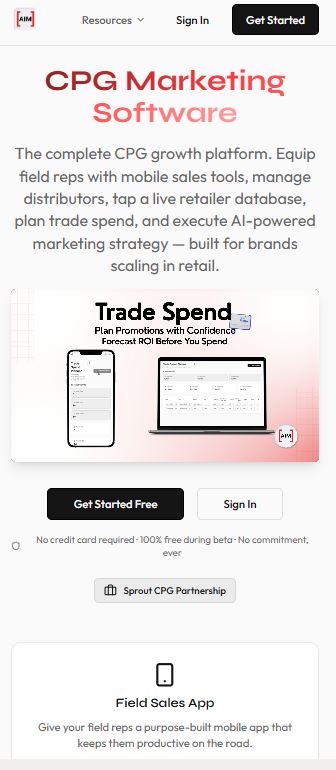
The free CPG Marketing Software has both pieces: the What-If Scenario Planner for modelling doors, pricing and spend before you commit, and the Retail Expansion Map for seeing where you actually are first.
It is free for CPG brands. Model the region you are already thinking about, and check whether it is a strength you are extending or a gap you are hoping to fill.