Community shortens the learning curve, and that is not a soft benefit — it is the difference between discovering that a co-packer quote is double the normal rate before you sign it or after.
Most of what an emerging CPG founder needs to know is not written down anywhere. It lives with people who learned it recently and expensively.
What communities actually give you
Not inspiration. Four specific things:
- Price calibration. Is this slotting fee normal? Is that broker rate reasonable? You cannot answer this from search, and getting it wrong is expensive in both directions.
- Vendor reality. Which co-packer actually delivers on time. Which distributor is responsive. The information nobody publishes.
- Sequence. Knowing what the next six months typically look like, so you can prepare rather than react.
- Perspective. Finding out that the thing that feels like a crisis is a normal Tuesday at your stage.
The last one matters more than founders expect. A lot of bad decisions are made by people who think they are uniquely behind.
Where to look
Startup CPG — large, active, with regional chapters and a Slack where real operational questions get real answers. Usually the first recommendation for a reason.
Foodbevy — food and beverage specifically, with vendor and partner resources alongside the peer network.
Naturally Network — regional chapters in the natural products world. Strong if you are in natural channels, and genuinely local, which matters for in-person connections.
SKU — accelerator-shaped, more structured, with a mentor network. A different proposition from an open community: more commitment, more concentrated help.
How to get value rather than noise
Most founders join several, lurk, and get nothing. Three habits separate the two outcomes:
Ask specific questions
“How do I get into retail” gets nothing useful. “Has anyone used [distributor] in the Southeast, and what were payment terms like?” gets real answers, because it is answerable.
Answer more than you ask
You know things. Your packaging mistakes, your co-packer experience, your first chain rejection are all useful to someone six months behind you. The founders who get the most are visibly contributing — and the reciprocity is not abstract, it is that people remember you.
Pick one and be present
Membership in four communities you never post in is worth less than being known in one. Depth beats coverage here as much as it does in retail.
What communities cannot do
Worth being clear-eyed:
- They are not a substitute for your own numbers. Someone else’s velocity in a different chain tells you little about yours.
- Advice is stage-specific and rarely labelled. Guidance from a brand with national distribution may be actively wrong for you.
- Consensus is not evidence. Communities develop received wisdom, and some of it is out of date.
Take the calibration and the vendor intelligence. Make your own decisions.
The argument for not building alone
The expensive mistakes in this category are mostly knowable in advance — a contract term, a co-packer minimum, a retailer’s real expectations. They are not secret; they are simply undocumented, and the only reliable way to find them is to ask people who already hit them.
An hour in a community is routinely worth more than a day of research, because you are reading the answer instead of deriving it.
Find them in one place
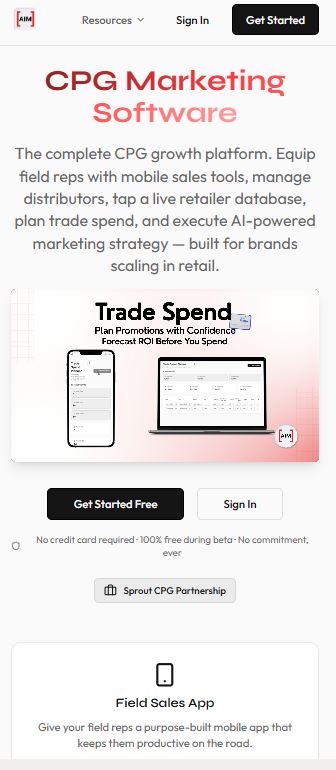
The Founder Communities section of the Resources Hub inside the free CPG Marketing Software lists these alongside the media, retail discovery, data, investor and event sections.
It is free for CPG brands. Join one, ask one specific question this week, and answer one.